
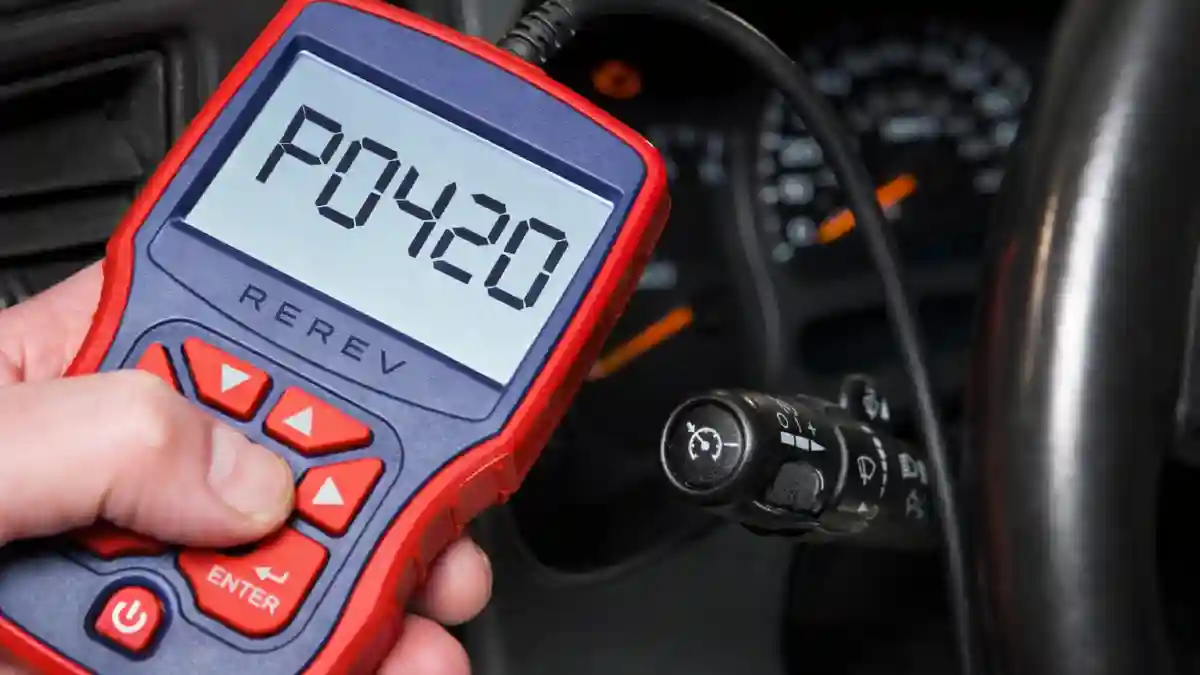
When the check engine light illuminates and a scan reveals the P0420 code, it can be a cause for concern for many drivers. This code is very common in a wide variety of vehicles and is typically related to the efficiency of the catalytic converter, although it doesn’t always mean the converter itself is faulty.
In this post, you’ll learn what the P0420 code means, the common causes that trigger it, including sensor and exhaust system issues, and how technicians diagnose it. We’ll also discuss potential repair solutions and the types of costs you can expect.
What Is the P0420 Code? – (Definition)
P0420 Code – Catalyst System Efficiency Below Threshold (Bank 1)
What “Bank 1” Means
- Bank 1 refers to the side of the engine that contains cylinder #1
- Inline engines (4-cylinder) only have Bank 1
- V6 and V8 engines have Bank 1 and Bank 2 (P0430 is the Bank 2 equivalent)
What the P0420 Code Means in Simple Terms?
The P0420 code means “Catalyst System Efficiency Below Threshold (Bank 1).” In simple terms, this means your car’s engine computer (ECM or PCM) has detected that the catalytic converter is not working as efficiently as it should.
- Upstream oxygen sensor (Sensor 1) – located before the catalytic converter
- Downstream oxygen sensor (Sensor 2) – located after the catalytic converter
A healthy catalytic converter smooths out the exhaust gases, resulting in a stable signal from the downstream oxygen sensor. When the ECM sees that the downstream sensor is behaving similarly to the upstream sensor, it concludes that: “The catalytic converter is not efficiently cleaning the emissions.” When this inefficiency falls below a programmed limit, the ECM sets the P0420 trouble code.
How the Catalytic Converter Works?
The catalytic converter helps clean your vehicle’s exhaust before it leaves the tailpipe. As hot exhaust gases pass through the converter, they flow over a honeycomb structure coated with precious metals such as platinum, palladium, and rhodium, which act as catalysts.
These catalysts cause chemical reactions that convert harmful pollutants into less harmful gases. Oxygen sensors before and after the catalytic converter monitor this process, allowing the engine computer to determine whether the converter is working efficiently.
Common Symptoms of a P0420 Code
Many drivers are surprised by how subtle P0420 symptoms can be.
Most Common Symptoms
- Check engine light (often the only symptom)
- Slight drop in fuel economy
- Mild loss of engine performance
- Occasional sulfur or “rotten egg” smell
- Failed emissions or smog test
Less Common Symptoms
- Rough idle
- Hesitation during acceleration
- Engine misfires (if underlying issues exist)
- Rattling noise from under the vehicle (damaged converter substrate)
In many cases, the car still drives normally, which is why P0420 often goes ignored.
What Causes the P0420 Code?
The biggest mistake people make is assuming the catalytic converter is always the problem. In reality, multiple issues can cause this code.
#1. Failing Catalytic Converter (Most Expensive Cause)
Over time, converters degrade due to:
- Age and mileage
- Excessive heat
- Oil or coolant contamination
- Long-term misfires
Converters typically last 100,000–150,000 miles, but poor engine health can shorten their lifespan.
#2. Bad Oxygen Sensors (Very Common)
- Age and respond slowly
- Become contaminated
- Send inaccurate readings
A faulty downstream O2 sensor is a frequent and much cheaper cause of P0420.
#3. Exhaust Leaks
Leaks before or near the catalytic converter can:
- Allow extra oxygen into the exhaust stream
- Trick oxygen sensors
- Reduce perceived catalyst efficiency
Common leak locations
- Exhaust manifold
- Gaskets
- Flex pipe
- Welded seams
#4. Engine Misfires or Rich Fuel Mixture
Unburned fuel entering the exhaust can:
- Overheat the catalytic converter
- Damage internal substrate
- Trigger P0420
Common contributors
- Worn spark plugs
- Bad ignition coils
- Leaking fuel injectors
#5. Oil or Coolant Burning
- Oil (worn piston rings, valve seals)
- Coolant (head gasket leak)
These contaminants coat the catalytic converter and reduce its efficiency.
#6. Software or PCM Issues (Rare)
- ECM software calibration issues
- Incorrect threshold sensitivity
How to Diagnose the P0420 Code Properly
Replacing parts without proper diagnosis is one of the fastest ways to waste money. A P0420 code doesn’t always mean the catalytic converter is bad, it can be caused by faulty sensors, exhaust leaks, or engine issues. A step-by-step approach ensures you address the real problem efficiently.
#Step 1: Scan for Additional Codes
Check for related trouble codes before tackling P0420:
- Misfire codes (P0300–P0308)
- Oxygen sensor codes (P0130–P0161)
- Fuel trim codes (P0171, P0172)
Fix these first, as they can directly affect catalytic converter performance.
#Step 2: Check Live Oxygen Sensor Data
Monitor oxygen sensors in real time to detect inefficiency:
- Upstream sensor: rapid switching
- Downstream sensor: slow or stable movement
If both sensors behave similarly, it usually indicates reduced catalytic converter efficiency.
#Step 3: Inspect the Exhaust System
Look for leaks or damage that can trigger false codes:
- Cracked or loose pipes and flanges
- Damaged heat shields
- Ticking or hissing sounds
Even minor leaks before the converter can affect sensor readings.
#Step 4: Verify Engine Health
Engine problems can affect emissions and the catalytic converter:
- Excessive oil consumption
- Coolant loss
- Fouled spark plugs
Fixing these issues prevents unnecessary catalytic converter replacement.
#Step 5: Test Oxygen Sensors
A faulty downstream sensor can trigger P0420 incorrectly:
- Slow, stuck, or biased sensor readings
- Proper testing confirms sensor function
- Replace sensors only if testing shows they are truly faulty.
How to Fix the P0420 Code and Its Cost
A P0420 code doesn’t always mean the catalytic converter is bad. Often, the problem comes from engine issues, oxygen sensors, exhaust leaks, or outdated software. Tackling repairs from least to most expensive can save money and ensure the real problem is fixed.
Repair Options (From Cheapest to Most Expensive)
#1. Fix Engine Performance Issues
- Replace spark plugs or ignition coils
- Repair fuel system issues
- Address oil or coolant burning
- Fixes Cost:- $50–$400
Engine problems like misfires, poor fuel delivery, or burning oil can reduce catalytic converter efficiency. Fixing these issues often clears P0420 without touching the exhaust system.
#2. Repair Exhaust Leaks
- Replace gaskets
- Weld cracked pipes
- Replace flex pipe
- Fixes Cost:- $100–$600
Even minor exhaust leaks can affect oxygen sensor readings and trigger P0420. Proper inspection and repair are essential before considering catalytic converter replacement.
#3. Replace Oxygen Sensors
- Replace the downstream oxygen sensor if faulty
- Use high-quality OEM sensors for reliability
- Fixes Cost: $150–$350
A failing downstream sensor is a common cause of P0420. Replacing it often restores correct readings and prevents unnecessary converter replacement.
#4. ECM Software Update
- Dealer reflash if applicable
- Cost: $0–$150
Some vehicles may need a software update to correct sensor calibration or emissions programming. This step can sometimes resolve P0420 without replacing any parts.
#5. Replace Catalytic Converter
- OEM converters are reliable but expensive
- Aftermarket options are cheaper but vary in quality
- Cost: Aftermarket: $600–$1,500 – OEM: $1,500–$3,500+
If all other fixes fail, the catalytic converter may need replacement. Ensure sensors, engine, and exhaust are addressed first to avoid unnecessary costs.
Can a Catalytic Converter Cleaner Fix P0420?
- May help in very mild carbon buildup cases
- Can improve short-term efficiency
- Cannot repair a damaged converter
These cleaners are best used as temporary or preventive measures. They are not a guaranteed fix and should not replace proper diagnosis or repairs.
Will Clearing the Code Make It Go Away?
Clearing the P0420 code without fixing the underlying problem will only turn off the check engine light temporarily. It doesn’t fix the problem, and the code will almost certainly return after a few drive cycles. Modern engine control modules (ECMs) constantly monitor the catalytic converter’s efficiency, so any persistent issue will quickly trigger the code again.
Why simply clearing the code doesn’t work
Clearing the code simply resets the engine control module (ECM). If the catalytic converter or its related components, such as oxygen sensors or exhaust leaks—are still malfunctioning, the ECM will detect the same problem during normal operation and turn the check engine light back on.
Drive Cycles
Modern cars often require several drive cycles to fully monitor the emissions system—starting the car, reaching operating temperature, and driving under various conditions. If the underlying problem isn’t fixed, the P0420 code will reappear after the ECM completes these checks.
The Real Solution
To truly fix the P0420 code, you must identify and repair the root cause, which may include:
- A faulty catalytic converter
- A faulty upstream or downstream oxygen sensor
- An exhaust leak
- An engine misfire or other condition affecting emissions
Clearing the code is like putting a bandage on a deeper problem, it hides the symptom temporarily but doesn’t solve the issue.
How to Prevent the P0420 Code
Preventing a P0420 code begins with keeping your engine and exhaust system in good condition. Regular maintenance like oil changes, spark plug replacements, and fixing engine misfires helps protect the catalytic converter and oxygen sensors.
It’s also important to address exhaust leaks quickly and use high-quality fuel to maintain proper emissions performance. Following the manufacturer’s maintenance schedule and replacing faulty sensors promptly can significantly reduce the chances of a P0420 code.
Tips to Prevent P0420:
- Perform regular engine tune-ups
- Replace faulty oxygen sensors
- Fix exhaust leaks quickly
- Use high-quality fuel
- Avoid prolonged misfires or running rich/lean
- Follow the manufacturer’s maintenance schedule
Is It Safe to Drive with a P0420 Code?
In most cases, a P0420 code does not immediately affect drivability. Your car will usually run normally, and you may not notice any performance issues. This means you can drive short distances to a repair shop without major risk.
However, continuing to drive for long periods with a P0420 code can damage the catalytic converter or other components over time, especially if the engine is running rich, misfiring, or producing excessive heat. It can also increase emissions, potentially causing your vehicle to fail an emissions test.
- Short trips are generally safe, but avoid prolonged driving
- Don’t ignore repeated misfires or engine problems
- Repairing the underlying cause as soon as possible protects your catalytic converter
- Ignoring the issue can lead to higher repair costs later
FAQ’s
Here are some frequently asked questions (FAQs) about the P0420 code.
Q. Can a P0420 code appear after replacing the catalytic converter?
Yes. If the oxygen sensors are faulty, the engine has unburned fuel issues, or the new converter is low-quality, the code can return even after replacement.
Q. How long can a P0420 code go unnoticed?
Some vehicles run for months with P0420 without obvious symptoms, but the catalytic converter may gradually degrade, leading to costly repairs if ignored.
Q. Can bad fuel trigger a P0420 code?
Yes. Contaminated or low-quality fuel can leave deposits in the catalytic converter, reducing efficiency and causing the code.
Q. Does a P0420 affect emissions tests?
Almost always. Vehicles with an active P0420 code will likely fail an emissions test, even if the car seems to run fine.
Q. Can software updates or ECM resets fix a P0420?
Sometimes. If the ECM is incorrectly reading oxygen sensor data, an update or reset may help, but it won’t fix mechanical problems like a failing converter.
Q. How can I check if the catalytic converter is really bad?
Mechanics can perform a temperature test, backpressure test, or use a scan tool to compare oxygen sensor readings before and after the converter to confirm failure.
Q. Could aftermarket parts trigger a P0420?
Yes. Aftermarket catalytic converters or performance exhausts may not meet OEM efficiency standards, which can trigger a P0420 code.
Q. Is a P0420 code covered under warranty?
It depends. Many new vehicles have a separate catalytic converter warranty (often 8 years/80,000 miles in the U.S.), but coverage varies by manufacturer and cause.