
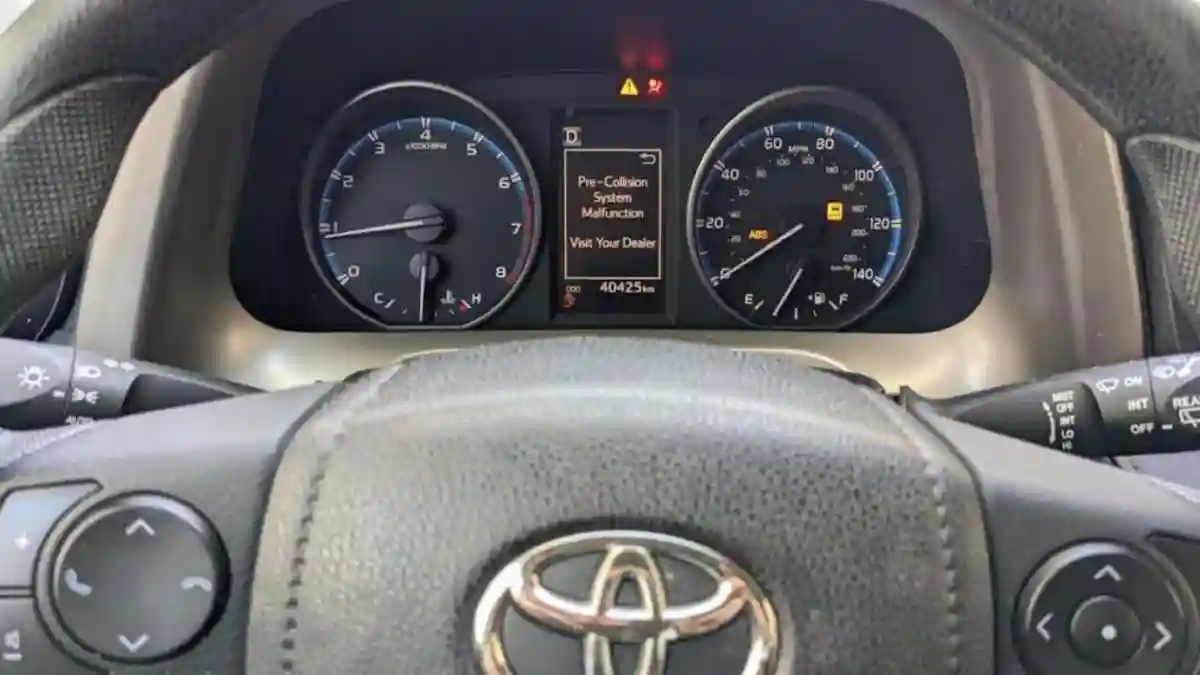
Toyota vehicles are equipped with a Pre-Collision System (PCS) designed to warn the driver before a potential collision, helping to reduce the risk of an accident.
However, if the Toyota Pre-Collision System malfunctions, it can pose a serious safety risk, especially if the driver relies solely on it. There are several possible reasons for a PCS malfunction, and understanding these causes is essential for proper diagnosis and repair.
Toyota Pre-Collision System Malfunction Meaning
A Toyota Pre-Collision System (PCS) malfunction occurs when the vehicle’s safety system fails to detect obstacles or properly alert the driver in an emergency. This issue can lead to a lack of audible beeps or red warning lights, making the driver unaware of an impending collision.
In many cases, the PCS sensors function correctly, but the warning components such as the alert beeps or dashboard warning light fail to work. This can create a false sense of security, increasing the risk of an accident if the system does not provide timely warnings.
What Is a Pre-Collision System (PCS)?
A Pre-Collision System (PCS) is an advanced safety feature in modern vehicles designed to help prevent or reduce the severity of collisions. PCS utilizes a combination of radar, cameras, and sensors to detect potential obstacles and warn the driver before an accident occurs.
When the system identifies a possible collision with another vehicle, pedestrian, or object, it alerts the driver through visual warnings and audio beeps. In some advanced systems, automatic emergency braking (AEB) may be activated to help avoid or lessen the impact of a crash.
How Does a Pre-Collision System Work?
Most Toyota vehicles and other modern cars equipped with PCS rely on radar, sensors, and cameras to detect obstacles in their path. Here’s how the system functions:
- Detection – The system continuously scans the surroundings for potential hazards.
- Warning Signals – If a collision risk is detected, the driver receives an alert via visual indicators and sound warnings.
- Automatic Braking (if applicable) – In advanced PCS models, the system may engage automatic emergency braking to reduce impact or avoid a crash.
Limitations of Pre-Collision Systems
While pre-collision systems enhance vehicle safety, they are not foolproof. Certain conditions, such as poor weather, low visibility, or sensor malfunctions, can affect their accuracy. Drivers should always remain attentive and not rely solely on PCS for accident prevention.
Causes of Pre-Collision System Malfunction in Toyota Vehicles
Pre-collision system malfunctions in Toyotas can occur for a variety of reasons. Below, we explore the most common causes and how to remedy them.
#1. Faulty Radar Sensor or Camera
Toyota’s pre-collision system relies on radar sensors and cameras to detect obstacles. If any of these components malfunction, the system may fail to warn the driver or miscalculate the distance, causing a false alert. Faulty radar sensors or cameras can result in the system failing completely or giving misleading warnings.
#2. Dirty or Obstructed Camera
The simplest but most common cause of a PCS malfunction is dirt, mud, or debris stuck to the camera lens. Poor road conditions can cause dust and dirt to accumulate on the camera, hindering it from sending accurate signals. Regular cleaning of the camera can help maintain the proper functionality of the system.
#3. Debris On The Radar Sensor
Similarly, dirt, snow or debris on the radar sensor can impede its ability to detect objects. If the radar sensor is blocked, the PCS may not operate correctly. Inspect and clean the radar sensor regularly to ensure optimal performance.
#4. Wiring Problems
The PCS relies on wiring connections to link the radar sensor, camera, Pre-Collision Module and ECM (Engine Control Module). Damaged or worn wiring can disrupt communication between these components, causing the system to malfunction. A professional mechanic should inspect the wiring before replacing any PCS component.
#5. Faulty Airbag Sensor
The PCS is connected to the vehicle’s airbag system. If the airbag sensor is faulty or needs to be reset, the PCS may malfunction or fail to detect the correct distance between the vehicle and obstacles. If you experience PCS problems, have the airbag sensor checked.
#6. Forward Collision Warning (FCW) Error
If the vehicle in front brakes suddenly, the Forward Collision Warning (FCW) system in your Toyota may turn on a warning light on the dashboard.
This can interfere with the functionality of the PCS, potentially causing automatic braking. If this happens often, consider resetting the system by turning off the ignition for a while or following Toyota’s recommended reset procedure.
#7. Dirty or Tinted Windshield
A dirty or heavily tinted windshield can interfere with the PCS’ ability to detect obstacles. Radar sensors need a clear field of vision to work properly. Clean the windshield regularly and avoid applying dark tints that can obstruct the sensor’s view.
#8. Incorrect Tow Hitch Installation
If the tow hitch is installed incorrectly and obstructs the radar sensor, it may interfere with PCS operation. In such cases, the system may miscalculate distances or fail to detect obstacles correctly. Make sure the tow hitch is installed properly by a professional mechanic to avoid PCS malfunction.
How To Fix a Pre-Collision System Malfunction in Toyota?
If your Toyota’s pre-collision system (PCS) is malfunctioning, the first step is to identify the cause and troubleshoot accordingly. Below are the common causes and solutions for Toyota pre-collision system malfunctions:
- Check The Radar Sensor: If the radar sensor is covered with dust, dirt or mud, clean it thoroughly. A faulty radar sensor can cause errors in the system. Have it checked by a professional mechanic and replaced if necessary.
- Check The Pre-Collision Camera: A dirty PCS camera can interfere with the proper operation of the system. Clean it carefully. If the camera is faulty, replace it with a new one.
- Check The Wiring: Damaged or loose wiring can trigger a PCS malfunction. Check the wiring and repair or replace it if necessary.
- Reset The Pre-Collision System Module: Sometimes, minor glitches can cause error messages to appear. A system reset can often resolve the problem.
- Check The Airbag Sensor: A faulty airbag sensor can affect the PCS. Have it checked and replaced if necessary.
- Keep The Windshield Clean and Clear: A dirty or colored windshield can obstruct the PCS camera. Keep it clean and avoid using dark tints.
- Ensure Proper Tow Hitch Installation: An improperly installed tow hitch can hinder the radar sensor’s detection capabilities. Ensure correct installation.
- Fix Faulty Warning Indicators: Sometimes, the PCS works correctly, but the warning signals (beeping sound or warning lights) are faulty. Have them checked and repaired by a qualified mechanic.
If the problem persists, consult a Toyota dealership or an experienced mechanic for further diagnosis.
How To Reset Pre-Collision System Malfunction in Toyota?
To reset Toyota pre collision system malfunction you need to follow the following process.
- Step 1: First of all open the fuse box of Toyota vehicle and check the fuse related to pre-collision system, whether the fuse of pre-collision system is blown. If the fuse is blown, replace the fuse with a new one.
- Step 2: If the fuse is fine, then switch off the ignition of the vehicle and disconnect the main wire from the battery and leave it disconnected for 5 to 10 minutes and after 10 minutes connect the main wire of the battery. Through this process, if your Toyota has any errors related to pre-collision system malfunction, then those errors will be corrected.
- Step 3: If during both these process also you are facing Toyota pre collision system malfunction problem then there is some faulty parts related to pre collision system in the vehicle or there is some wiring related issue. You should contact a professional mechanic or visit your vehicle’s dealership for its troubleshooting.
How To Prevent of Pre-Collision System Malfunction?
Pre-collision systems used in vehicles work on the basis of radar sensors, cameras and wiring. If you want to avoid the problem of pre-collision system malfunction, then for this you need to pay attention to the following things.
- Always clean the radar sensor and camera before driving the vehicle, as accumulation of dust or mud on the radar sensor and camera can severely affect their functioning.
- Wiring and fuses should be checked, as damaged wiring and blown fuses can cause the system to shut down.
- Keep the windshield clean and never paint the windshield dark.
- Get your pre-collision system checked while getting your vehicle serviced.
Costs to Fix Toyota Pre‑Collision System (PCS) Malfunction
The cost of fixing a PCS malfunction in Toyota vehicles can vary significantly depending on the cause of the issue. Here’s a detailed look at potential repair scenarios:
#1. Cleaning and Sensor Clearing (Low or Free)
Often, the simplest and most common cause of a PCS malfunction is dirt, mud, snow, or ice obstructing the radar or camera sensors.
- Cost: Usually free if you clean it yourself.
- Professional Service: Some service centers may charge a minimal fee ($20–$50) to clean sensors and perform a system check.
- Why It Helps: Clearing obstructions allows the system to function properly and often resolves the warning without further repairs.
#2. Battery Reset or Minor System Calibration (Low Cost)
Sometimes, PCS issues are caused by temporary software glitches or minor system misalignments. Disconnecting the 12V battery for a few minutes or performing a minor recalibration can reset the system.
- Cost: Low — typically $50–$100 at a dealership.
- DIY Option: Disconnecting the battery can temporarily reset the system, but professional recalibration is recommended to ensure sensors operate within manufacturer specifications.
- Limitations: This only resolves minor software glitches; hardware faults still require repair.
#3. Sensor Realignment or Replacement (Moderate Cost)
If the radar sensor or camera has been misaligned, perhaps due to a minor collision or bumper replacement, the system may fail to detect objects correctly. Realignment or replacement may be necessary.
- Cost: $200–$600 depending on the sensor type and labor rates.
- Process:- Inspect the sensor for physical damage., Align sensors according to Toyota specifications using calibration tools., Test the system with a diagnostic tool to ensure proper function.
- Why It Matters: Misaligned sensors can cause false warnings or system disablement, affecting not only PCS but other safety features like adaptive cruise control.
#4. Camera or Radar Replacement and Full Calibration (High Cost)
If cleaning or sensor realignment doesn’t resolve the issue, it may indicate a faulty radar or camera unit, or even a malfunctioning PCS control module. Replacing these components requires professional service.
- Cost: $500–$1500+ depending on the Toyota model, sensor type, and labor charges.
- Steps Involved:- Remove and replace the faulty camera or radar sensor. 2. Perform full system calibration using dealership-grade tools. 3. Test PCS along with related safety systems (adaptive cruise control, lane-keeping assist, forward collision warning).
- Notes: Calibration is crucial — an uncalibrated sensor may give false warnings or fail to detect obstacles.
#5. Labor and Parts Considerations
- Dealer Rates vs. Independent Shops: Dealer service is often more expensive but guarantees factory-calibrated repairs and genuine parts. Independent shops may offer cheaper labor but ensure they have proper Toyota calibration tools.
- Regional Variations: Labor rates can vary by city or state, which can influence total repair costs.
- Warranty Coverage: Some PCS malfunctions may be covered under Toyota’s factory warranty or extended safety system warranty, reducing out-of-pocket expenses.
Final Thoughts
Pre-Collision System Malfunction in Toyota vehicles is a safety error that occurs when the vehicle is about to collide with an object and the audio beep or red warning light in the pre-collision system is unable to alert the driver. Common causes of this malfunction include sensor calibration issues, software glitches, electrical system failure, or sensor failure.
Toyota Pre-Collision System Malfunction – FAQs
Here are some frequently asked questions to help you understand Toyota’s Pre-Collision System malfunction.
Q. What does “Pre-Collision System Malfunction” mean in a Toyota?
It indicates that the PCS sensors or software have detected a fault, preventing the system from operating correctly. The system may be temporarily disabled until the issue is resolved.
Q. Can I drive my Toyota with a PCS malfunction warning?
Yes, you can drive, but key safety features like automatic braking, forward collision warnings, and adaptive cruise control may not work properly. Drive cautiously and get the system inspected.
Q. What are common causes of PCS malfunction?
Common causes include dirty or obstructed radar sensors or windshield camera, misaligned or damaged sensors, faulty wiring or electrical issues, software glitches or hardware failure, and aftermarket modifications blocking sensors.
Q. How much does it cost to fix a PCS malfunction?
Costs vary based on the root cause. Sensor cleaning may be free or minimal, battery reset or minor calibration can cost $50–$100, sensor realignment or replacement may cost $200–$600, and camera or radar replacement and calibration can range from $500 to $1500 or more.
Q. How can I reset the PCS system in my Toyota?
Minor resets may involve disconnecting the 12V battery for a few minutes. For proper reset or recalibration, a professional diagnostic scan at a dealership or certified mechanic is recommended.
Q. How can I prevent PCS malfunctions in the future?
Keep radar sensors and the windshield clean and free of obstructions, avoid very dark windshield tints near the camera, avoid front-end modifications that block sensors, schedule regular dealership inspections if warning lights appear, and drive carefully to prevent misalignment from bumps or minor collisions.
Hello, thank you for an informative article and website.
My sister-in-law had this problem with her RAV4, did all the checks as outlined here, except she didn’t have a spanner to disconnect the battery. As she was too far away for me to help, she called Toyota roadside assist. They diagnosed a dead starter battery, replaced it and off she went. This is identical to Microsoft Windows problems. The computer throws out, what appears to be a random error message, you go off on the troubleshooting route only to find that a restart is all that is required. Not saying that would have solved our problem, but “Pre-Collision System Malfunction” to dead starter Battery is a stretch.
Cheers, thank you for your website.
This Aussie appreciates it.
Thanks so much for sharing your experience! Your Microsoft Windows analogy is spot on—it’s amazing how a failing 12V battery can trigger such unrelated warning messages. I’m glad Toyota Roadside Assist got your sister-in-law back on the road quickly. Really appreciate your kind words and thanks for reading. Cheers, fellow Aussie!