
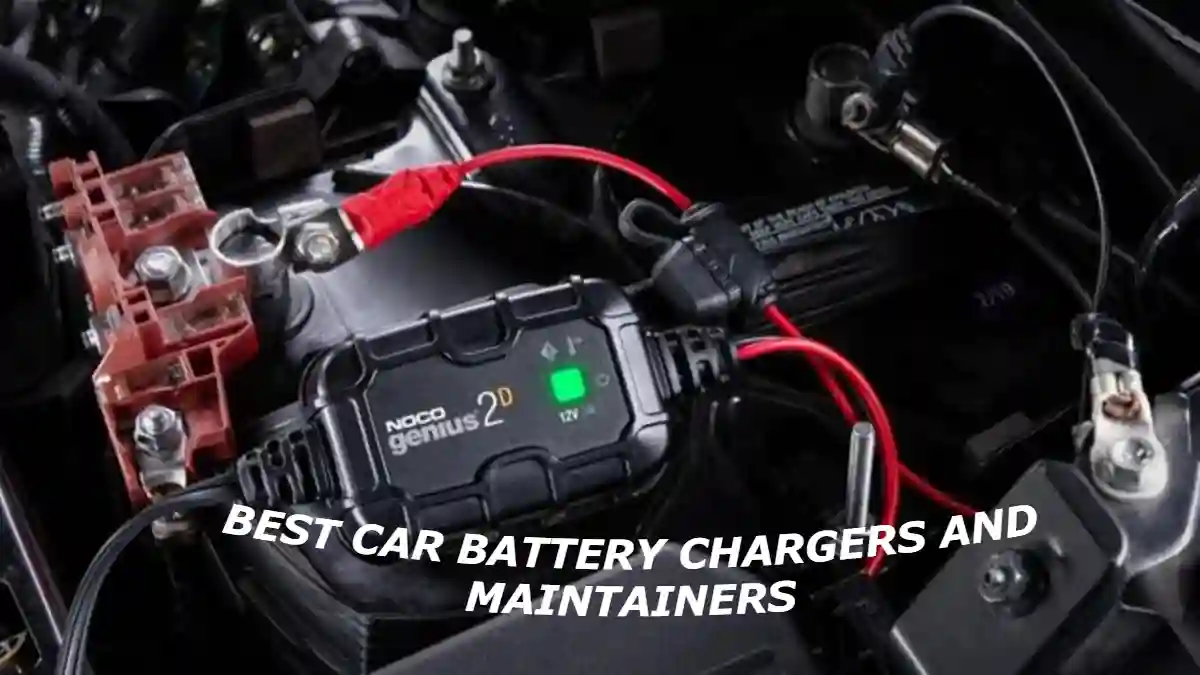
A car battery powers everything in your vehicle, making it one of the most essential components. Yet, many drivers often overlook the importance of battery chargers and maintainers in keeping their batteries healthy. Whether you drive every day, own a seasonal vehicle, or manage multiple cars, using the right charger or maintainer helps keep your battery strong, prevent unexpected breakdowns, and extend its overall lifespan.
In this detailed guide, we’ll cover everything you need to know in 2026, including how chargers and maintainers work, the differences between them, essential features to look for, top-rated products, and expert advice for every type of use.
Why You Should Invest in a Battery Charger and Maintainer
A car battery is more than just a power source—it’s the lifeline of your vehicle’s electrical system. From starting the engine to powering electronics like lights, infotainment systems, and security alarms, a healthy battery is essential. Unfortunately, car batteries are prone to gradual wear and unexpected failures if not properly maintained.
Here’s why a battery charger and maintainer
- Self-Discharge Happens Naturally: Batteries slowly lose charge even when not in use. Over weeks or months, this can lead to a dead battery, leaving you stranded.
- Short Trips Aren’t Enough: Driving short distances doesn’t give your alternator enough time to fully recharge the battery, leading to a slow but steady loss of power.
- Electronics Drain Power Continuously: Modern cars have numerous electronic components that draw small amounts of energy constantly, even when the vehicle is off.
- Temperature Extremes Reduce Efficiency: Heat can cause battery fluid to evaporate, while cold makes it harder for the battery to generate power, both shortening its lifespan.
- Long-Term Storage Risks: Vehicles that remain idle for extended periods are at high risk of deep discharge, which can permanently damage the battery.
A battery charger and maintainer ensures your battery stays fully charged, prevents sulfation, and keeps it healthy for longer. It’s a simple investment that saves money, prevents frustration, and ensures your car is always ready to go.
Battery Charger vs Battery Maintainer: What’s the Difference?
Understanding the difference between a battery charger and a battery maintainer is essential for keeping your car battery healthy and reliable. While both devices help manage your battery’s charge, they serve distinct purposes. Choosing the wrong one can lead to battery damage or unnecessary frustration.
#1. Battery Charger
A battery charger is designed to recharge a dead or discharged battery. It delivers a higher current to quickly restore power and get your vehicle running again.
- Purpose: Recharges weak or dead batteries.
- Current Output: Typically high (several amps), allowing faster charging.
- Usage Time: Usually connected for a few hours until the battery reaches full charge.
- Best For: Daily drivers, emergency situations, or when a battery has been drained.
#2. Battery Maintainer
A battery maintainer, also called a trickle charger, is designed to keep a battery fully charged over long periods without overcharging it. It provides a low, steady current, making it safe to leave connected for weeks or even months.
- Purpose: Maintains a fully charged battery, preventing self-discharge.
- Current Output: Low (usually under 2 amps), gentle on the battery.
- Usage Time: Can remain connected indefinitely.
- Best For: Vehicles in storage, seasonal cars, motorcycles, RVs, or boats.
#3. Smart Chargers: The Best of Both Worlds
Modern smart chargers often combine the functions of a charger and a maintainer. They can charge a dead battery quickly and then switch automatically to maintenance mode once full. This prevents overcharging and ensures your battery stays healthy long-term.
Battery Types and Compatibility: Choosing the Right Charger
Not all car batteries are the same. Using the wrong charger or maintainer can damage the battery, shorten its lifespan, or even pose a safety risk. To make the best choice, it’s important to understand the common battery types and what chargers are compatible with each.
#1. Lead-Acid (Flooded) Batteries
Lead-acid batteries, also known as flooded batteries, are the most common and affordable type for cars, trucks, and motorcycles. They contain liquid electrolyte (sulfuric acid) that reacts with lead plates to generate power.
- Voltage: Usually 12V for cars.
- Pros: Low cost, widely available, easy to replace.
- Cons: Needs occasional maintenance (checking water levels), can be damaged by overcharging or deep discharge.
Charger Compatibility
- Standard chargers or smart chargers designed for lead-acid batteries.
- Avoid using chargers that are only for AGM or lithium batteries.
#2. AGM (Absorbent Glass Mat) Batteries
AGM batteries are a type of sealed lead-acid battery where the electrolyte is absorbed in fiberglass mats. They are commonly found in modern vehicles, start-stop systems, and premium cars.
- Voltage: 12V (typical for cars).
- Pros: Maintenance-free, vibration-resistant, better performance in extreme temperatures.
- Cons: More expensive than flooded batteries, sensitive to overcharging.
Charger Compatibility
- Must use a charger that supports AGM mode or smart multi-stage charging.
- Avoid traditional high-current chargers that can overheat or damage the battery.
#3. Gel Cell Batteries
Gel batteries are another sealed lead-acid type, where the electrolyte is in gel form instead of liquid. They are commonly used in recreational vehicles, motorcycles, and marine applications.
- Voltage: Usually 12V.
- Pros: Leak-proof, maintenance-free, deep discharge resistant.
- Cons: Can be damaged by standard chargers; slower to charge.
Charger Compatibility
- Requires a charger with a gel battery mode or smart multi-stage charging.
- Never use standard flooded battery chargers.
#4. Lithium Batteries (LiFePO₄)
Lithium Iron Phosphate (LiFePO₄) batteries are becoming more popular in electric vehicles, high-performance cars, and RVs. They are lightweight, long-lasting, and highly efficient.
- Voltage: 12V or higher (depending on configuration).
- Pros: Very long lifespan, fast charging, lightweight, high energy density.
- Cons: Expensive, requires compatible charger, sensitive to overvoltage.
Charger Compatibility
- Must use a lithium-specific charger.
- Chargers designed for lead-acid batteries will not work safely and can permanently damage the battery.
How to Choose the Right Battery Charger and Maintainer
Choosing the right charger or maintainer ensures battery longevity, safety, and reliable performance. Here are the essential features:
- Smart Charging: Automatically adjusts current and voltage based on battery type and condition.
- Multi-Stage Charging: Charges efficiently in stages—bulk, absorption, and maintenance—for better battery health.
- Float / Maintenance Mode: Keeps batteries fully charged without overcharging, ideal for stored or seasonal vehicles.
- Safety Protections: Prevents reverse polarity, short circuits, overcharging, and overheating.
- Additional Features: LED display, compatibility with multiple battery types (Lead-acid, AGM, Gel, Lithium), and durable, portable design.
Best Car Battery Chargers and Maintainers For 2026
Leading models like the NOCO Genius10, NOCO Genius5, CTEK MXS 5.0, CTEK Multi US 7002, and NOCO Genius2X4 provide safe and efficient charging for a wide range of batteries, along with long-term maintenance to extend battery life.
Learn more about these 5 best car battery chargers, including features, specifications, and expert guidance, to help you choose the right charger and maintainer for your car and battery.
#1. NOCO Genius1 Smart Battery Maintainer
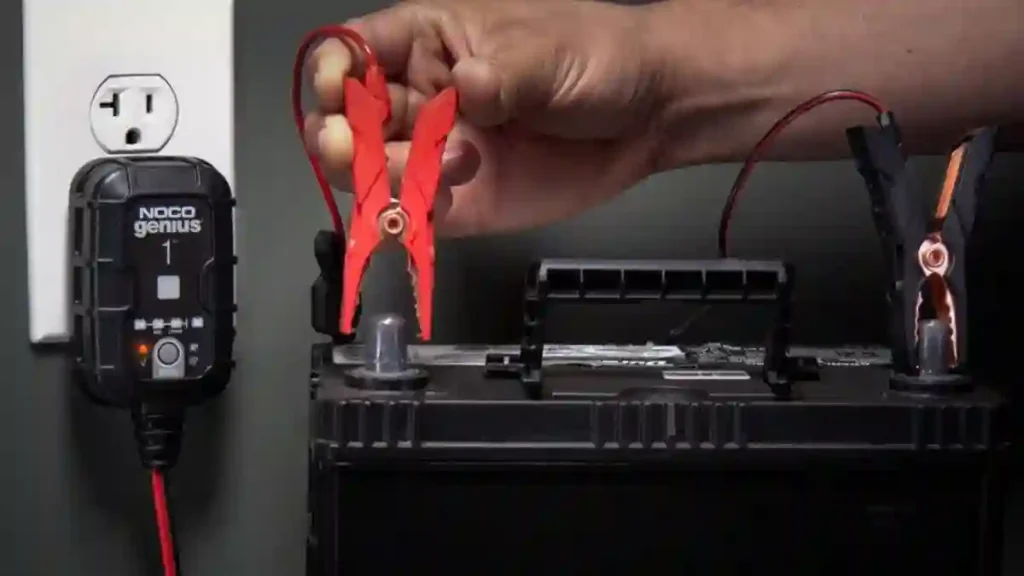
The NOCO Genius1 is a 1 Amp smart battery maintainer designed for 6 V and 12 V batteries, including lead-acid (flooded, AGM, GEL, MF) and lithium-ion types. It is ideal for long-term battery care, automatically switching to float mode once the battery is fully charged, preventing overcharging and prolonging battery life. Compact and easy to use, it is perfect for motorcycles, cars, and small vehicles.
Features
- 1 Amp output for safe slow charging and maintenance.
- Supports 6 V and 12 V lead-acid and lithium-ion batteries.
- Automatic microprocessor-controlled charging.
- Safety protections: reverse polarity, spark-proof, overcharge.
- Float/maintenance mode for long-term battery care.
Specifications
- Output Current: 1 A DC (6 V / 12 V)
- Battery Capacity Range: ~20–60 Ah
- Operating Voltage: 120–240 VAC
- Weight: ~0.35 kg
- Approx Price (USD): ~$25–$35
#2. NOCO Genius2X4 Car Battery Maintainer
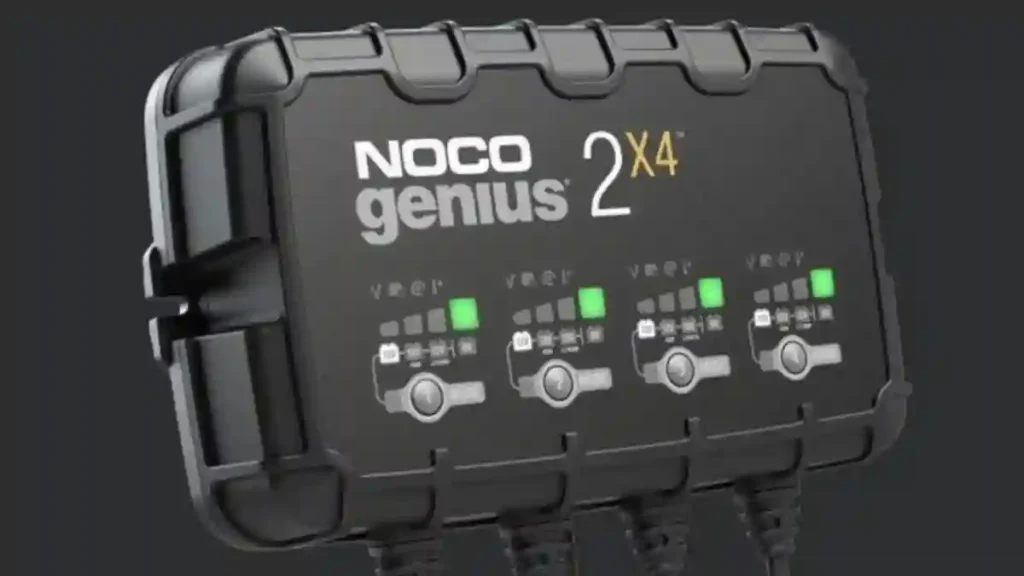
The NOCO Genius2X4 is a dual-channel smart battery maintainer providing 2 Amps per channel (4 Amp total) for maintaining two batteries simultaneously. It supports 6 V and 12 V lead-acid batteries and automatically switches to maintenance mode once batteries are fully charged, making it ideal for workshops or households with multiple vehicles.
Features
- Dual 2 Amp output for simultaneous maintenance of two batteries.
- Supports lead-acid battery types (flooded, AGM, GEL, MF).
- Automatic multi-stage charging and maintenance.
- Safety protections: spark-proof, reverse polarity, overcharge.
- Float/maintenance mode ensures long-term battery care.
Specifications
- Output Current: 2 A per channel DC, total 4 A
- Battery Capacity Range: ~20–100 Ah per channel
- Operating Voltage: 120–240 VAC
- Weight: ~1.2 kg
- Approx Price (USD): ~$60–$85
#3. NOCO Genius5 Smart Battery Charger & Maintainer

The NOCO Genius5 is a 5 Amp smart charger and maintainer for 6 V and 12 V automotive and powersport batteries. It provides fast charging with automatic multi-stage maintenance, and includes temperature compensation to optimize battery life in all climates. Suitable for cars, motorcycles, and marine batteries.
Features
- 5 Amp output suitable for most automotive batteries.
- Supports lead-acid and lithium-ion batteries.
- Microprocessor-controlled multi-stage charging and maintenance.
- Float/maintenance mode for long-term battery care.
- Safety protections: spark-proof, reverse polarity, overcharge, short-circuit.
Specifications
- Output Current: 5 A DC (6 V / 12 V)
- Battery Capacity Range: Up to ~120 Ah
- Operating Voltage: 120–240 VAC
- Weight: ~0.54 kg
- Approx Price (USD): ~$70–$90
#4. NOCO Genius10 Smart Battery Charger & Maintainer
The NOCO Genius10 is a 10 Amp smart charger and maintainer for 6 V and 12 V batteries, capable of handling larger automotive, marine, and deep-cycle batteries up to 230 Ah. It features advanced multi-stage charging, low-voltage recovery, and float maintenance mode, making it highly reliable for both fast charging and long-term battery care.
Features
- 10 Amp output for fast charging of larger batteries.
- Supports lead-acid and lithium-ion batteries.
- Microprocessor-controlled multi-stage charging and float maintenance.
- Safety protections: spark-proof, reverse polarity, overcharge, overheat.
- Rugged IP65-rated housing for durability.
Specifications
- Output Current: 10 A DC (6 V / 12 V)
- Battery Capacity Range: Up to ~230 Ah
- Operating Voltage: 120–240 VAC
- Weight: ~1.5 kg
- Approx Price (USD): ~$99–$125
#5. CTEK MXS 5.0 Battery Charger & Maintainer
The CTEK MXS 5.0 is a 5 Amp intelligent charger and maintainer for 12 V lead-acid batteries. It features multi-stage charging, reconditioning mode, and automatic float maintenance, keeping batteries in optimal condition even during long periods of inactivity. Ideal for cars, motorcycles, and small marine batteries.
Features
- 5 Amp output with 8-step smart charging.
- Works with 12 V flooded, AGM, EFB, GEL, and MF batteries.
- Float/maintenance mode for long-term connection.
- Reconditioning mode for older or sulfated batteries.
- Safety protections: reverse polarity, short-circuit.
Specifications
- Output Current: 5 A DC (12 V)
- Battery Capacity Range: ~1.2–110 Ah
- Operating Voltage: 220–240 VAC
- Weight: ~0.85 kg
- Approx Price (USD): ~$120–$140
#6. CTEK Multi US 7002 Battery Charger & Maintainer
The CTEK Multi US 7002 is a 7 Amp smart charger and maintainer for 12 V flooded, AGM, and GEL batteries. With desulfation, multi-stage charging, and automatic float maintenance, it is ideal for heavy-duty automotive or seasonal battery storage.
Features
- 7 Amp output for faster charging and maintenance.
- Supports 12 V flooded, AGM, and GEL batteries.
- Multi-stage charging with desulfation.
- Float/maintenance mode for long-term battery storage.
- Safety protections: reverse polarity, overcharge, short-circuit.
Specifications
- Output Current: 7 A DC (12 V)
- Battery Capacity Range: ~14–150 Ah
- Operating Voltage: 220–240 VAC
- Weight: ~1.1 kg
- Approx Price (USD): ~$150–$180
#7. PowerDripi Car Battery Maintainer
The PowerDripi is a compact 1 Amp smart battery maintainer for 12 V lead-acid batteries. It is designed for long-term maintenance, providing float-mode charging to prevent overcharge and battery degradation. Perfect for motorcycles, cars, and seasonal storage.
Features
- 1 Amp slow charging for safe long-term maintenance.
- Works with flooded, AGM, and GEL batteries.
- Automatic microprocessor-controlled operation.
- Safety protections: reverse polarity, overcharge, short-circuit.
- Float/maintenance mode for extended storage.
Specifications
- Output Current: 1 A DC (12 V)
- Battery Capacity Range: ~20–60 Ah
- Operating Voltage: 100–240 VAC
- Weight: ~0.35 kg
- Approx Price (USD): ~$15–$30
#8. Schumacher SC1280 Battery Charger & Maintainer
The Schumacher SC1280 is a 2 Amp automatic charger and maintainer for 6 V and 12 V lead-acid batteries. It combines multi-stage charging with maintenance mode for safe, long-term battery care, suitable for small to medium automotive batteries.
Features
- 2 Amp output with automatic maintenance mode.
- Supports flooded, AGM, GEL, and maintenance-free batteries.
- Microprocessor-controlled multi-stage charging.
- Safety protections: reverse polarity, overcharge, short-circuit.
- Compact and portable design.
Specifications
- Output Current: 2 A DC (6 V / 12 V)
- Battery Capacity Range: ~20–100 Ah
- Operating Voltage: 120 VAC
- Weight: ~1.2 kg
- Approx Price (USD): ~$50–$70
#9. Draper Smart Charger & Battery Maintainer
The Draper Smart Charger & Maintainer is a 2–3 Amp 12 V charger with automatic maintenance mode. It provides simple, reliable long-term maintenance for flooded, AGM, GEL, and maintenance-free batteries. Ideal for casual or seasonal battery care.
Features
- 2–3 Amp output with float/maintenance mode.
- Works with flooded, AGM, GEL, and MF batteries.
- Safety protections: reverse polarity, overcharge, short-circuit.
- LED indicators for easy monitoring.
- Compact and lightweight design.
Specifications
- Output Current: 2–3 A DC (12 V)
- Battery Capacity Range: Up to ~100 Ah
- Operating Voltage: 100–240 VAC
- Weight: ~1 kg
- Approx Price (USD): ~$40–$60
We Recommend: Top 5 All-in-One Battery Chargers & Maintainers for 2026
Among the 9 chargers and maintainers units, the NOCO Genius10, NOCO Genius5, CTEK MXS 5.0, CTEK Multi US 7002, and NOCO Genius2X4 stand out as the best all-in-one solutions. These devices combine fast and efficient charging with automatic float/maintenance modes, ensuring batteries remain healthy without overcharging or damage. They support a wide range of battery types, including lead-acid and lithium-ion, and include advanced safety features for reliable long-term use.
Users consistently praise these five models for their durability, ease of use, and consistent performance. Whether it’s charging a car, marine, or deep-cycle battery, or maintaining multiple batteries simultaneously, these chargers deliver dependable results, making them the most trusted choice for anyone seeking both fast charging and long-term maintenance in 2026.
How We Test Car Battery Chargers and Maintainers
Testing a car battery charger or maintainer ensures it works safely and efficiently with your vehicle’s battery. First, check compatibility with your battery type and voltage, and inspect the device for any visible damage or loose connections. When connected, verify that the charger operates correctly, with LED indicators showing charging, maintenance, or fully charged modes. Smart chargers should also demonstrate safety features such as spark-proof operation and reverse-polarity protection.
Next, monitor the charging performance by checking current output and overall charging time. Leave the battery in maintenance mode for several hours or overnight to confirm it maintains proper voltage without overcharging. For added assurance, you can perform a load test by starting your vehicle or using the battery after charging.
Key Points
- Ensure voltage and battery type compatibility.
- Inspect charger and connections for damage or corrosion.
- Verify LED indicators and smart functions (charging, maintenance, full charge).
- Test safety features: spark-proof, reverse polarity, overcharge protection.
- Monitor charging current and total charging time.
- Leave battery in maintenance mode to ensure long-term health.
- Optional: perform a load test to confirm battery performance.
How to Connect a Car Battery Charger or Maintainer
Connecting your charger correctly is essential for safety and optimal battery performance. Follow these steps carefully:
Turn Off the Vehicle and Charger
- Make sure your car, motorcycle, or marine vehicle is off.
- Ensure the charger or maintainer is unplugged from the power source.
Identify Battery Terminals
- Locate the positive (+, usually red) and negative (−, usually black) terminals on the battery.
- Clean any corrosion on the terminals with a wire brush or terminal cleaner.
Connect the Charger Clamps
- Positive first: Attach the red clamp to the positive (+) terminal.
- Negative second: Attach the black clamp to the negative (−) terminal.
- For some vehicles, it’s safer to connect the negative clamp to a metal chassis ground away from the battery.
Set Charger Mode and Voltage
- Select the correct battery type (lead-acid, AGM, GEL, lithium-ion) and voltage (6V or 12V).
- Choose charge or maintenance/float mode depending on your need.
Plug In and Start Charging
- Plug the charger into a wall outlet.
- Monitor the LED indicators or display to ensure charging begins.
Monitor and Disconnect
- Wait until the charger indicates the battery is fully charged or in maintenance mode.
- Unplug the charger first, then remove clamps negative first, positive second.
Safety Tips
- Always wear gloves and eye protection.
- Ensure the area is well-ventilated.
- Never touch clamps together while connected to power.
- Avoid charging near sparks or flames.
FAQ’s
Here are some FAQs for the best car battery chargers and maintainers.
Q. What is the difference between a battery charger and a battery maintainer?
A battery charger restores a discharged battery to full charge quickly. A battery maintainer provides a low, steady charge to keep the battery at optimal voltage over time, preventing discharge and extending battery life. Some devices combine both functions.
Q. Can I use a charger on any type of car battery?
Not all chargers are universal. Many support lead-acid, AGM, GEL, and lithium-ion batteries, but you should check your battery type and voltage (usually 12V for most cars). Using the wrong charger can damage the battery.
Q. How long does it take to charge a car battery?
Charging time depends on battery capacity, current state, and charger output. Standard chargers may take 4–12 hours, while fast chargers can do it in 1–3 hours. Battery maintainers work slowly over days or weeks to keep the battery topped off.
Q. Is it safe to leave a battery maintainer connected for a long time?
Yes. Quality maintainers are designed for long-term use and feature automatic shut-off or float mode to prevent overcharging, making them ideal for seasonal or rarely used vehicles.
Q. Do I need to remove the battery from the car to charge it?
Not necessarily. Many chargers allow in-vehicle charging for cars, motorcycles, or boats. Always follow safety guidelines and ensure the charger supports in-vehicle use.
Q. What safety features should I look for in a battery charger?
- Overcharge protection
- Reverse polarity protection
- Short-circuit protection
- Temperature compensation
Q. Can using a battery maintainer improve battery life?
Yes. Regular maintenance keeps the battery at optimal voltage, prevents sulfation, and reduces the risk of complete discharge, especially for seasonal or classic vehicles.