
Modern engines demand more power, better fuel efficiency, and lower emissions simultaneously. Achieving these goals with traditional turbocharging systems is challenging, which is why variable geometry turbochargers (VGTs) have become a key component of advanced engine design.
A variable geometry turbocharger allows an engine to deliver strong low-RPM torque, smooth acceleration, and consistent high-RPM power without the drawbacks of conventional turbochargers. This technology is widely used in diesel engines, commercial vehicles, and emission-controlled powertrains, making it one of the most significant developments in forced induction systems.
This article covers everything related to variable geometry turbochargers, including how they work, their components, advantages, limitations, applications, maintenance procedures, and their future role in engine technology.
What Is a Variable Geometry Turbocharger?
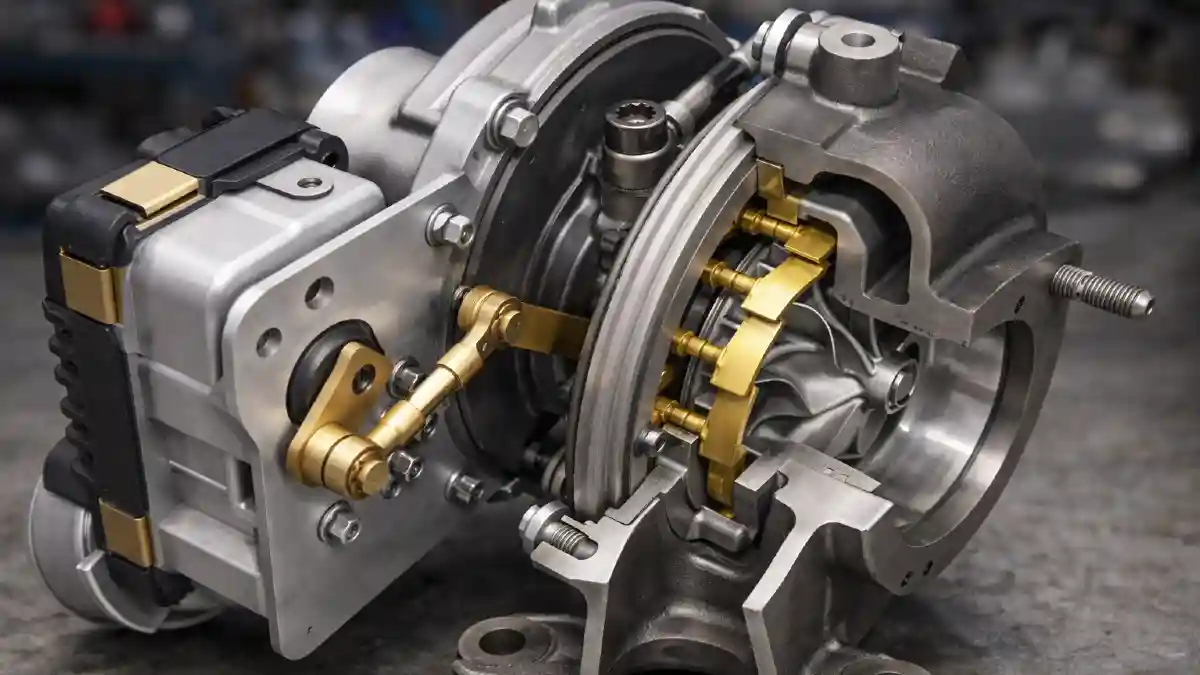
A Variable Geometry Turbocharger, also known as a Variable Nozzle Turbocharger (VNT), is a turbocharging system designed to actively control how exhaust gases are directed toward the turbine. Instead of relying on a fixed exhaust path, it adjusts flow behavior in real time to match engine demand.
This is made possible through a set of movable vanes located within the turbine housing. The vanes change position based on operating conditions such as engine speed and load, allowing the turbocharger to react quickly and efficiently throughout the entire RPM range.
In contrast to fixed geometry turbochargers that perform best within a narrow operating window, a variable geometry turbocharger continuously adapts its airflow characteristics to maintain consistent and balanced boost pressure under all driving conditions.
Why Variable Geometry Turbochargers Were Developed?
Traditional turbochargers face a major compromise:
- Small turbochargers spool quickly but restrict airflow at high RPM
- Large turbochargers support high power but suffer from turbo lag
The VGT was developed to eliminate this compromise by offering:
- Fast spool-up at low engine speeds
- High airflow at high RPM
- Better drivability and throttle response
- Reduced emissions
This technology became especially important with the introduction of strict emission standards (Euro 5, Euro 6, EPA regulations).
How a Variable Geometry Turbocharger Works?
A VGT uses movable vanes inside the turbine housing to control exhaust gas velocity and pressure.
At Low RPM
- The vanes close, narrowing the exhaust passage.
- This increases exhaust gas velocity, spinning the turbine faster and reducing turbo lag.
At High RPM
- The vanes open, allowing more exhaust gas to flow smoothly.
- This prevents over-boost and maintains optimal performance.
The entire process is managed by the Engine Control Unit (ECU) using electronic or vacuum actuators.
Key Components of a Variable Geometry Turbocharger
- Turbine Housing – Contains the variable vanes and directs exhaust gases toward the turbine wheel.
- Variable Vanes (Nozzle Ring) – Adjustable blades that control exhaust gas flow angle and velocity.
- Actuator (Electronic or Vacuum) – Moves the vanes based on ECU commands.
- Turbocharger Shaft – Connects the turbine wheel to the compressor wheel.
- Compressor Housing – Compresses intake air and sends it to the engine.
- ECU Control System – Monitors boost pressure, RPM, air-fuel ratio, and emissions.
Types of Variable Geometry Turbochargers
The types of variable geometry turbochargers are as follows:
2. Vacuum-Controlled VGT
- Uses engine vacuum to move vanes
- Common in older diesel engines
- Less precise than electronic systems
2. Electronic VGT (EVGT)
- Uses electric motors for vane control
- Faster response and better accuracy
- Found in modern passenger cars and trucks
Advantages of Variable Geometry Turbochargers
- Reduced Turbo Lag – Variable geometry turbochargers provide faster spool-up at low engine speeds by controlling exhaust gas flow, resulting in quicker throttle response and minimal turbo lag.
- Improved Fuel Efficiency – By maintaining optimized boost pressure across different RPM ranges, VGTs promote more efficient combustion and help reduce overall fuel consumption.
- Higher Engine Performance – VGT technology delivers strong low-end torque while still supporting high power output at higher engine speeds, ensuring consistent performance throughout the RPM range.
- Better Emissions Control – Variable geometry turbochargers support exhaust gas recirculation (EGR) systems and enable precise boost control, helping engines comply with strict emission regulations.
- Smooth Driving Experience – With balanced power delivery and reduced lag, VGTs offer smooth acceleration and reliable performance, making them suitable for daily driving, towing, and heavy-load applications.
Disadvantages of Variable Geometry Turbochargers
- Higher Cost – Variable geometry turbochargers are more expensive than fixed-geometry turbos due to their complex design and additional moving components.
- Sensitivity to Carbon Buildup – In diesel engines especially, soot and carbon deposits can accumulate on the vanes, causing them to stick or operate less efficiently.
- Complex Repairs – The intricate design of VGTs makes maintenance and repairs more complicated compared to conventional turbochargers.
- Limited Use in High-Temperature Gasoline Engines – Gasoline engines generate higher exhaust temperatures, which can stress VGT mechanisms, although modern materials are gradually improving durability.
Variable Geometry Turbocharger in Diesel Engines
Diesel engines are among the primary beneficiaries of variable geometry turbocharger technology. Several factors make VGTs particularly well-suited for diesel applications:
Lower Exhaust Temperatures
Diesel engines typically produce exhaust gases at lower temperatures than gasoline engines. This allows the movable vanes in a VGT to operate reliably over long periods without excessive thermal stress, ensuring consistent boost control and longer component life.
High Low-End Torque Demand
Diesel engines are designed to deliver strong torque at low RPM for towing, hauling, and everyday drivability. A VGT improves low-speed performance by increasing exhaust gas velocity onto the turbine, allowing the engine to build boost quickly and generate torque almost immediately.
Strict Emission Regulations
Diesel engines face stringent emission standards worldwide, including Euro 6 and EPA Tier regulations. VGTs help manage exhaust gas recirculation (EGR) and control boost precisely, reducing nitrogen oxide (NOx) emissions without sacrificing power or efficiency.
Efficient EGR Integration
By regulating exhaust flow, VGTs allow diesel engines to use EGR systems effectively. This lowers NOx emissions while maintaining optimal engine performance, making them ideal for modern, emission-compliant diesel vehicles.
NOTE – Overall, VGT technology enhances diesel engine performance by combining low-end torque, high-RPM efficiency, and emissions compliance, making it a cornerstone in both passenger and commercial diesel applications.
Common Problems in Variable Geometry Turbochargers
Like any complex component, VGTs can experience issues that affect performance and reliability. Early detection and maintenance can prevent serious engine problems.
- Stuck Vanes – Carbon and soot deposits from exhaust gases can accumulate on the movable vanes, causing them to stick or move sluggishly.
- Actuator Failure – The vanes in a VGT are controlled by electronic or vacuum actuators, which can fail over time due to electrical or mechanical issues.
- Boost Pressure Errors – Incorrect vane positioning may cause over-boost or under-boost, affecting engine power and efficiency.
- Check Engine Light – Problems with the VGT, such as actuator malfunction or vane sticking, often trigger engine fault codes and illuminate the check engine light.
Symptoms of a Failing Variable Geometry Turbocharger
A failing VGT can significantly affect engine performance and drivability. Recognizing these symptoms early can help prevent serious engine damage and costly repairs.
- Loss of Power – The engine may struggle to produce the usual torque and horsepower due to improper boost delivery.
- Poor Acceleration – Delayed turbo response can make acceleration sluggish, especially at low RPM.
- Excessive Black Smoke – Incomplete combustion caused by reduced boost can lead to thick black exhaust smoke, particularly in diesel engines.
- Whistling or Grinding Noise – Damaged vanes or turbine components can produce unusual noises during operation.
- Reduced Fuel Efficiency – Inefficient boost and combustion result in higher fuel consumption than normal.
- Engine Warning Light – The ECU may detect turbocharger or boost-related faults, triggering the check engine light.
Final Thoughts
The Variable Geometry Turbocharger is one of the most important innovations in modern engine technology. By intelligently controlling exhaust gas flow, it delivers better performance, higher fuel efficiency, reduced emissions, and a smoother driving experience.
Although it comes with higher cost and maintenance requirements, the benefits far outweigh the drawbacks—especially in diesel vehicles, commercial fleets, and performance-oriented engines.
For drivers, mechanics, and automotive enthusiasts, understanding how a VGT works helps in better maintenance decisions, cost savings, and performance optimization.
FAQs About Variable Geometry Turbochargers
These frequently asked questions cover practical aspects of VGTs that aren’t discussed elsewhere in the article.
Q. How does a VGT affect engine longevity?
A properly maintained VGT can improve engine efficiency and reduce stress on components by optimizing boost delivery, but neglecting maintenance may lead to turbo and engine damage over time.
Q. Can VGTs be retrofitted to older engines?
Retrofitting a VGT to an older engine is possible but challenging, requiring custom exhaust modifications, ECU adjustments, and actuator integration. It is generally more practical for modern engines.
Q. Do VGTs make a difference in towing or heavy-load vehicles?
Yes. VGTs provide strong low-end torque, which improves towing performance, load-carrying capacity, and acceleration under heavy loads.
Q. How does a VGT interact with exhaust gas recirculation (EGR) systems?
VGTs regulate exhaust flow to optimize EGR operation, helping reduce NOx emissions while maintaining engine power and efficiency.
Q. What maintenance practices prolong VGT life?
Regular oil changes with high-quality engine oil, proper engine warm-up and cooldown, and avoiding excessive short trips help prevent vane sticking and actuator wear.
Q. Can a faulty VGT damage other engine components?
Yes. Persistent boost problems or vane failure can create over-boost or under-boost conditions, potentially causing damage to pistons, valves, or the exhaust system.
Q. Are there any tuning considerations for VGT-equipped engines?
Engine tuning must account for vane behavior and boost limits. Improper tuning can overstress the turbo or trigger engine fault codes.
Q. Do all diesel vehicles use VGTs?
No. VGTs are more common in modern diesel engines, particularly those designed for strong low-RPM torque or to meet strict emission standards.
Q. How can drivers detect early VGT issues before failure?
Early signs include minor loss of acceleration, slight black smoke, inconsistent boost, or unusual turbo noises. Regular diagnostics can help detect actuator or vane problems before major damage occurs.
Q. What is the difference between a VGT and a twin-scroll turbocharger?
While both improve turbo response, a VGT uses adjustable vanes to change exhaust flow dynamically, whereas a twin-scroll turbo separates exhaust pulses into two channels. VGTs provide variable boost across the RPM range, while twin-scroll turbos optimize flow for a fixed engine speed window.