
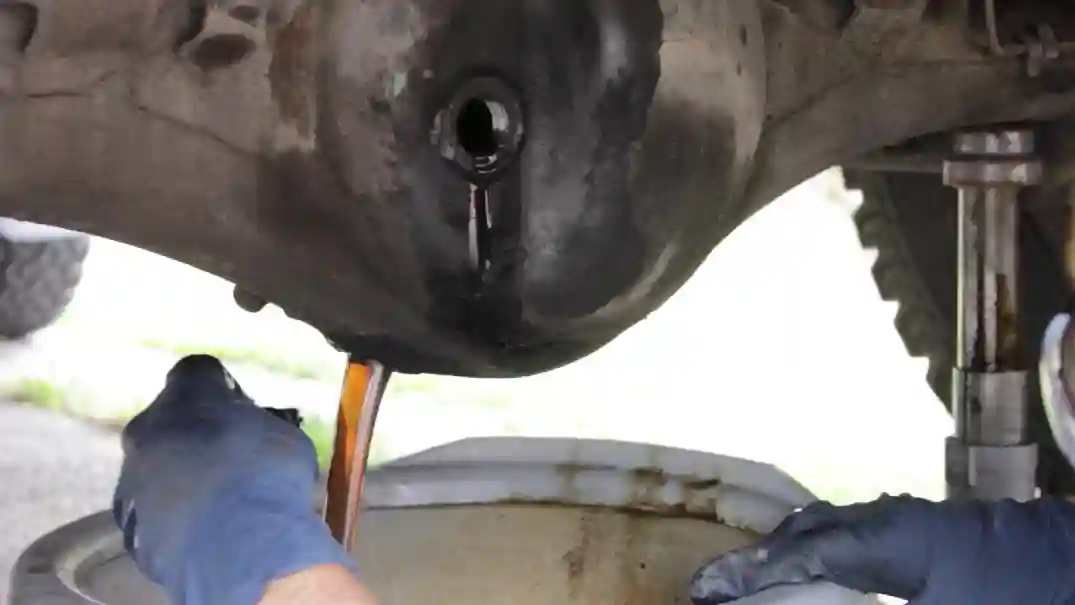
Differential fluid service is one of the most commonly overlooked vehicle maintenance tasks, yet it plays a critical role in protecting some of the most expensive components in your drivetrain. The differential is responsible for transferring power from the transmission to the wheels while allowing them to rotate at different speeds—something that places extreme stress on gears, bearings, and seals.
Without regular professional differential fluid service, internal components are exposed to excessive heat, metal-to-metal contact, and contamination. Over time, this leads to accelerated wear, noisy operation, and in severe cases, complete differential failure that can cost thousands of dollars to repair.
If you’ve been wondering why differential fluid service is necessary or how often differential fluid should be changed, this guide breaks it down clearly, using real-world service intervals, mechanic recommendations, and usage-based schedules rather than vague “lifetime fluid” claims.
What Is Differential Fluid and Why Does It Matter for Service Life?
Differential fluid, often called gear oil—is a heavy‑duty lubricant formulated for hypoid gears. Hypoid gears (used in most rear axles) operate under extreme sliding and pressure loads, far harsher than the rolling oil film environment inside an engine. That’s why gear oil is thicker (higher viscosity) and contains extreme pressure (EP) additives, anti‑foam agents, corrosion inhibitors, and sometimes friction modifiers (especially for clutch‑type limited‑slip differentials).
Functions of Differential Fluid
- Lubrication: Maintains an oil film between gear tooth contact surfaces under high load.
- Cooling: Carries heat away from the ring & pinion and bearings to the housing case, where it can dissipate.
- Contaminant suspension: Holds microscopic metal particles in suspension so a magnet or fluid change can remove them.
- Corrosion protection: Additives reduce rust when moisture or condensation finds its way in.
- Friction Control: In limited‑slip units, the right additives prevent chatter while still allowing torque transfer.
Why Differential Fluid Service Is Important (Mechanic-Recommended Reasons)
Ignoring differential fluid service is one of the most common — and most expensive — maintenance mistakes vehicle owners make. While the service itself is inexpensive, neglecting it can lead to major drivetrain failures that cost several times more than routine maintenance. Experienced mechanics consistently recommend scheduled differential fluid replacement for one simple reason: it protects the most heavily loaded components in your drivetrain.
Below are the key reasons professional technicians insist this service should never be skipped.
#1. Controls Extreme Heat and Prevents Gear Failure
The differential works under constant high torque and friction, especially during:
- Towing trailers or campers
- Carrying heavy payloads
- Highway driving at sustained speeds
- Off-road or mountain driving
As temperature rises, old differential fluid loses its viscosity and thermal stability. Once this happens, gears begin to run metal-to-metal, leading to:
- Overheated bearings
- Burnt gear oil
- Premature ring and pinion failure
A differential repair cost due to heat damage can easily reach $2,000–$5,000, while a routine differential fluid change cost is a fraction of that.
#2. Flushes Out Metal Debris That Destroys Gears
Every mile driven produces tiny metal shavings as gears mesh together. Over time, these particles:
- Suspend in the fluid
- Act like liquid sandpaper
- Gradually grind away gear surfaces
Without regular differential service, this contamination accelerates wear and shortens the lifespan of:
- Bearings
- Gear teeth
- Limited-slip clutches
Professional differential fluid replacement removes this debris before irreversible damage occurs.
#3. Prevents Catastrophic and Expensive Drivetrain Repairs
Differentials are not designed to fail gradually — they often fail suddenly and completely. Once internal damage begins, repair options are limited to:
- Differential rebuild
- Ring and pinion replacement
- Complete axle assembly replacement
The rear differential replacement cost alone can exceed $3,000–$6,000, depending on vehicle type. In contrast, preventive differential maintenance is one of the highest ROI services available.
#4. Stops Moisture Intrusion and Internal Corrosion
Even sealed differentials are vulnerable to:
- Condensation buildup
- Aging axle seals
- Water intrusion from deep puddles or snow
Moisture contaminates gear oil, causing:
- Rust on gear teeth
- Bearing pitting
- Reduced load-carrying capacity
Once corrosion starts, damage continues even if the vehicle is parked. Routine differential fluid service removes moisture before it can compromise internal components.
#5. Preserves Limited-Slip Differential Performance
Vehicles equipped with limited-slip or locking differentials are especially sensitive to fluid condition. Using old or incorrect fluid can result in:
- Chattering during turns
- Binding and grabbing
- Uneven torque transfer
Mechanics often diagnose these symptoms as fluid-related issues, not mechanical failure. Proper limited-slip differential fluid service restores smooth operation and prevents unnecessary part replacement.
#6. Eliminates Differential Noise and Vibration Issues
Whining, humming, or clunking noises are classic signs of degraded differential fluid. Old fluid loses its ability to:
- Cushion gear contact
- Absorb vibration
- Reduce harmonic noise
Timely differential fluid replacement is one of the cheapest noise-prevention services and often resolves minor drivetrain noises before they escalate.
#7. Extends Vehicle Lifespan and Protects Resale Value
Documented drivetrain maintenance – especially differential fluid changes – increases:
- Vehicle longevity
- Buyer confidence
- Trade-in and resale value
Dealers and private buyers view neglected differential service as a red flag, often lowering vehicle value due to potential hidden drivetrain damage.
How Often to Change Differential Fluid: Mileage, Time & Usage Guide
How often to change differential fluid? There is no single mileage interval that fits every vehicle. The service interval depends on load, driving style, climate, and manufacturer specifications. The ranges below are a general guideline—always confirm with your owner’s manual.
For normal driving, differential fluid is typically changed every 30,000–60,000 miles. Under severe conditions such as towing, off-roading, AWD/4WD use, or extreme temperatures, service is recommended every 15,000–40,000 miles. Even with low mileage, many mechanics advise changing the fluid every 4–5 years.
Below is a practical range you can use as a starting point. Always compare with your owner’s manual.
| Usage Type | Suggested Interval (Miles) | Suggested Interval (Km) | Time Limit | Notes |
|---|---|---|---|---|
| Light commuting / no towing / mostly paved roads | 60,000–100,000 mi | 96,000–160,000 km | 5 yrs | Use OEM spec fluid; synthetic extends margin. |
| Mixed use / occasional towing / mild off‑road | 40,000–60,000 mi | 64,000–96,000 km | 4 yrs | Inspect sooner if water crossings. |
| Heavy towing / frequent hauling / hot climate | 30,000–40,000 mi | 48,000–64,000 km | 3 yrs | Use full synthetic where approved. |
| Serious off‑road / mud / water / sand | Inspect every season; change 15,000–30,000 mi | 24,000–48,000 km | 1–2 yrs | Change immediately after deep water submersion. |
| Commercial / fleet / plow truck | Follow severe service; sample oil if high mileage use | — | Based on oil analysis | Track temps if possible. |
Manufacturer vs Real-World Intervals
Many manufacturers list long differential fluid intervals—sometimes even calling it “lifetime fluid”—but these recommendations assume ideal driving conditions. In real-world use, factors like towing, heavy loads, off-road driving, oversized tires, and extreme temperatures put far more stress on the differential than factory testing assumes.
Because of this, experienced mechanics often recommend changing differential fluid earlier than manufacturer intervals, typically cutting long factory recommendations in half. Following real-world service intervals helps prevent premature gear wear, overheating, and costly differential repairs.
Severe Service Conditions That Shorten Change Intervals
If any of these apply, service sooner:
- Regular towing above 50% of rated tow capacity.
- Snow plow duty or stop‑and‑go commercial use.
- Off‑road crawling where diffs get hot then splash‑cooled.
- Deep water, mud, or sand driving (fluid may emulsify—change ASAP).
- Lifted vehicles with steeper driveline angles.
- High‑speed desert running (heat load skyrockets).
- Track or performance use.
Even one of these is enough to move you into the 30k–40k mile service window.
Open vs Limited‑Slip vs Electronic Locking Differentials: Does It Change the Fluid Schedule?
Yes, sometimes. While the interval doesn’t always change, the fluid type can.
Open Differential
- Usually straight GL‑5 hypoid gear oil.
- Interval based on duty cycle; 60k light / 30k severe is safe.
Clutch‑Type Limited‑Slip (Posi, Trac‑Lok, Sure‑Grip, etc.)
- Requires friction modifier additive unless the fluid already includes it.
- Chatter when turning = fluid contaminated or missing additive.
- Shorten interval under towing or off‑road use.
Helical / Gear‑Type Limited‑Slip (Torsen‑style)
- Typically no friction modifier needed.
- Still needs clean, high‑quality EP gear oil.
Electronic / Air Locker (Selectable Locking Differential)
- Follow manufacturer fluid spec (some use standard GL‑5; some require specific viscosity).
- Inspect seals; contamination from actuator failures is rare but possible.
Synthetic vs Conventional Gear Oil: Does It Last Longer?
When it comes to gear oil, one of the most common questions is whether synthetic gear oil lasts longer than conventional gear oil and the short answer is yes.
Synthetic gear oil is engineered with high-quality base oils and advanced additives that provide better thermal stability, oxidation resistance, and flow characteristics. This means it can withstand extreme temperatures and heavy loads without breaking down as quickly as conventional oil. Because of this superior stability, synthetic gear oil often lasts 50,000–100,000 miles or more, depending on the vehicle and manufacturer recommendations.
On the other hand, conventional gear oil is derived from mineral oil and tends to break down faster under heat and stress. It usually needs to be changed every 30,000–50,000 miles. Conventional oils also attract more moisture and contaminants, reducing their protective properties over time.
Advantages of Synthetic Gear Oil
- Longer service life (extends drain intervals)
- Better protection in extreme temperatures
- Superior lubrication under heavy loads
- Reduced friction and wear
When To Choose Synthetic Oil
If you drive in harsh conditions (towing, racing, extreme temperatures) or want to extend your differential life with fewer fluid changes, synthetic is worth the investment despite the higher cost.
Rear vs Front Differential Service Timing (AWD/4×4)
All-wheel-drive (AWD) and four-wheel-drive (4×4) vehicles typically have two differentials (or more in some cases) – one in the front and one in the rear. Each requires regular fluid changes, but the service interval can differ depending on usage and design.
Rear Differential
The rear differential often handles more torque and load, especially in trucks, SUVs, and rear-biased AWD systems. Because of this, its fluid usually experiences more stress and contamination. Most manufacturers recommend changing the rear differential fluid every 30,000–50,000 miles, or sooner if you tow heavy loads or drive in extreme conditions.
Front Differential
The front differential typically carries less load than the rear, so its fluid doesn’t degrade as quickly. Service intervals can extend up to 50,000–60,000 miles. However, in vehicles with a 50/50 AWD system or those used off-road, the front diff works harder and may need more frequent changes—similar to the rear.
Factors That Shorten Intervals
- Heavy towing or hauling
- Frequent off-road driving
- Driving through water or deep snow
- High-speed or performance driving
Tip: Always check your owner’s manual, as some modern synthetic fluids are labeled as “lifetime,” though periodic checks are still essential to avoid premature wear.
How to Check Differential Fluid Level & Condition
You don’t always have to drop the cover to inspect fluid.
Basic Level Check (Fill Plug Style Axle)
- Park on level ground; chock wheels.
- Remove fill plug (usually on the diff cover or housing).
- Stick a clean finger or plastic zip‑tie into the hole.
- Fluid should be at or just below the bottom of the fill hole.
Condition Check
- Color: Fresh gear oil is amber to honey‑brown (some synthetics may be darker new). Black or thick sludge = overdue.
- Smell: Burnt sulfur smell = overheated.
- Metal: Fine paste on magnet is normal; chunks or glitter = concern.
- Milky/cloudy: Water contamination. Change immediately.
How to Change Differential Fluid (Step-by-Step)
Tools & Supplies You’ll Need
- Safety: Wheel chocks, jack stands (rated), gloves, eye protection.Tools:
- Socket or hex/Allen/torx bit for fill & drain plugs (varies by vehicle)
- Breaker bar
- Torque wrench (ft‑lb + in‑lb range depending on bolts)
- Drain pan (wide, at least 4 qt / 4 L capacity)
- Gasket scraper or plastic razor
- Shop towels / brake cleaner
- Pry tool or rubber mallet (for covers)
Supplies
- Correct grade gear oil (e.g., 75W‑90, 75W‑140, GL‑5 spec)
- Friction modifier (if required)
- RTV sealant or diff cover gasket
- New crush washer(s) for drain/fill plugs (if applicable)
- Thread sealant (some plugs)
- Limited‑slip additive (if not pre‑blended)
Let us learn the process of changing the differential fluid step by step.
- Park Safely – Park on a level surface, set the parking brake, and use wheel chocks.
- Lift the Vehicle – Use a jack and secure with jack stands.
- Locate Differential – Find the fill and drain plugs on the differential housing.
- Loosen Fill Plug First – Ensure you can refill before draining.
- Drain Old Fluid – Place drain pan, remove drain plug, and let the oil drain completely.
- Inspect Fluid – Check for metal shavings or contamination.
- Clean and Replace Washer – Wipe area and install a new crush washer if needed.
- Reinstall Drain Plug – Tighten with a torque wrench to spec.
- Refill with New Gear Oil – Use a pump to fill until fluid slightly seeps out of the fill hole.
- Reinstall Fill Plug – Tighten to proper torque specs.
- Lower Vehicle & Test Drive – Lower the car and check for leaks after a short drive.
Pro Tip: Always use the manufacturer-recommended gear oil and change it sooner if towing or off-roading frequently.
Common Mistakes to Avoid
- Draining the diff before confirming you can open the fill plug.
- Using the wrong viscosity gear oil.
- Forgetting friction modifier—limited‑slip chatter after service is common.
- Reusing old RTV chunks or paper gasket fragments.
- Overfilling (foaming) or underfilling (starvation).
- Not cleaning the magnet—metal buildup stays in circulation.
- Ignoring leak at axle seals after refill (fresh fluid may expose worn seals).
Conclusion
Regular differential fluid changes are essential for protecting gears, bearings, and costly drivetrain components. Real-world driving often requires shorter service intervals than manufacturer recommendations, especially for towing, AWD/4WD, or heavy use. Timely fluid service is low-cost preventive maintenance that helps extend differential life and avoid expensive repairs.
FAQs
Here are some frequently asked questions that address common concerns and help clarify key points about differential fluid service.
Q. Does differential fluid really need to be changed?
Yes. Over time, the additives in differential fluid break down, metal particles accumulate from normal gear wear, and moisture can enter the system causing corrosion. Regular fluid changes ensure your gears are properly lubricated and protected, helping to extend the life of the differential.
Q. How often should differential fluid be changed if you tow a trailer?
Towing puts additional stress and heat on the differential. For severe-duty use, changing the fluid every 30,000–40,000 miles is recommended unless your vehicle manufacturer specifies a shorter interval. Frequent towing, heavy loads, or steep terrain may require even earlier service.
Q. Can you go 100,000 miles between differential oil changes?
While some manufacturers and synthetic fluids may allow very long intervals under light driving conditions, it’s not advisable if you tow, drive off-road, or operate in high temperatures. Stretching the interval that far can lead to degraded protection, gear wear, and potentially expensive repairs.
Q. What happens if you never change differential fluid?
Neglecting fluid changes can lead to gear whine, bearing wear, metallic sludge buildup, heat scoring, and eventual differential failure. Over time, this can result in extremely costly repairs or a full rebuild of the differential assembly.
Q. How do you know if your differential fluid is low or bad?
Check the fluid at the fill plug. If it appears milky, burnt, metallic, or below the fill hole, it’s time for service. Regular inspections help catch problems early and keep the differential running smoothly.
Q. Do both rear and front differentials need service?
Yes. If your vehicle has a front differential, as in AWD or 4×4 models, it requires periodic fluid changes just like the rear differential. Servicing both ensures balanced protection across the drivetrain.
Q. Can you mix gear oil brands?
It’s best not to. Mixing different brands or types of gear oil can alter the chemical balance and reduce protection. Always drain the differential completely and refill with the correct fluid that meets OEM specifications.
Q. Do you need a friction modifier?
Friction modifiers are necessary only if you have a clutch-type limited-slip differential and the gear oil you are using doesn’t already include it. Using the correct modifier ensures proper engagement and prevents chatter or excessive wear.
Q. Is synthetic gear oil worth it?
Synthetic gear oil is particularly beneficial for towing, extreme temperatures, or long service intervals. It provides superior heat resistance, better protection under load, and longer-lasting lubrication compared to conventional oils, as long as OEM viscosity specifications are followed.
Q. How long does it take to change differential fluid?
A DIY differential fluid change typically takes 30–90 minutes, depending on whether the differential cover needs to be removed or if it’s just a drain-and-refill job. Professional service is usually faster but may cost more.