
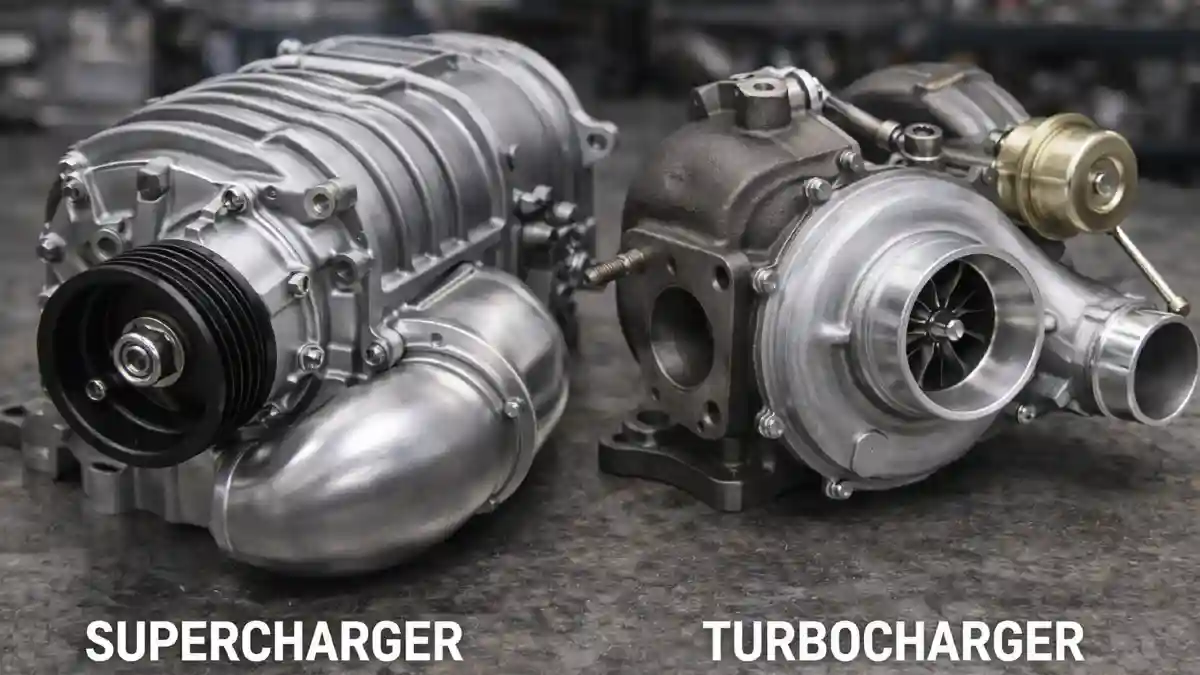
Whether you’re a car enthusiast, a daily driver, or someone planning performance upgrades, understanding the difference between superchargers and turbochargers is essential. Both technologies are designed to boost engine performance by forcing more air into the combustion chamber, but they work in fundamentally different ways and offer unique benefits and drawbacks.
In thispost, you’ll learn how each system works, key differences, pros and cons, costs, maintenance considerations, real‑world applications, and how to choose the best option for your vehicle.
Understanding Superchargers and Turbochargers
Superchargers and turbochargers are both systems that increase an engine’s power by forcing more air into the combustion chamber, which allows more fuel to burn and generates higher performance. While they aim for the same goal—more power—the way they operate is very different, and each has its unique advantages and trade-offs.
Superchargers
A supercharger is a mechanical device that forces more air into an engine’s combustion chamber, increasing the amount of oxygen available for fuel combustion. Unlike turbochargers, which rely on exhaust gases, a supercharger is directly powered by the engine, typically through a belt connected to the crankshaft. This direct connection allows the supercharger to deliver instant boost as soon as you press the accelerator.
The Working Process
- Air Intake: The supercharger draws in fresh air from the atmosphere.
- Compression: Internal rotors or impellers compress the air, increasing its density.
- Delivery: The compressed air is then fed into the engine’s intake manifold and cylinders, allowing the engine to burn more fuel.
- Boost: The result is a significant increase in horsepower and torque, especially at low and mid-range RPMs.
Types of Superchargers
- Roots-Type: Uses two meshing lobes to push air into the engine. It delivers immediate boost but is less efficient at higher RPMs.
- Twin-Screw: Compresses air internally, providing better efficiency and smoother power across a wider RPM range.
- Centrifugal: Looks like a small turbo, using an impeller to compress air. Boost increases progressively with engine speed, giving a smooth power curve.
Advantages of Superchargers
- Instant throttle response with no lag.
- Linear and predictable boost delivery.
- Relatively simple installation compared to turbochargers.
NOTE:- While superchargers provide quick and consistent power, they draw energy directly from the engine, which can slightly reduce fuel efficiency. They also add mechanical strain, so proper engine maintenance is crucial for long-term reliability.
Turbochargers
A turbocharger is a device that increases an engine’s power by using energy from the exhaust gases to compress and push more air into the combustion chamber. Unlike superchargers, which are mechanically driven by the engine, turbochargers harness otherwise wasted exhaust energy, making them highly efficient.
The Working Process
- Exhaust Flow: Hot exhaust gases exit the engine and spin a turbine connected to the turbocharger.
- Air Compression: The spinning turbine drives a compressor that draws in fresh air and compresses it, increasing its density.
- Delivery to Engine: The compressed air is fed into the intake manifold, allowing the engine to burn more fuel and generate higher horsepower and torque.
- Boost Effect: As the turbo spins faster with increasing exhaust flow, it provides higher boost, especially at higher RPMs, resulting in significant performance gains.
Turbocharger Types
- Single Turbo: One turbine-compressor setup, most common in performance and everyday cars.
- Twin-Scroll Turbo: Divides exhaust pulses for faster spool-up and reduced turbo lag.
- Variable Geometry Turbo (VGT): Adjustable vanes optimize airflow at different engine speeds, improving response and efficiency.
- Twin Turbo: Two turbos (either sequential or parallel) to maximize low-end response and top-end power.
Advantages of Turbochargers
- Uses exhaust energy, so it doesn’t directly draw engine power.
- Can deliver higher peak power than superchargers.
- Improves fuel efficiency on smaller engines while maintaining strong performance.
Considerations – Turbochargers operate under high heat and pressure, so proper cooling and regular oil maintenance are critical for longevity. Early turbo designs suffered from “turbo lag,” a delay in boost, but modern technologies like twin-scroll and VGT have minimized this issue.
Key Differences in Driving Experience
- Superchargers: Provide instant, linear power, excellent for quick take-offs and low-RPM acceleration. Drivers feel immediate throttle response without delay.
- Turbochargers: Deliver higher peak power and better efficiency but may have a brief delay before full boost. Ideal for sustained high-speed performance and smaller engines.
In short, superchargers favor immediate power and responsiveness, while turbochargers excel in efficiency and top-end performance. Choosing between them depends on whether you prioritize low-end responsiveness or high-end efficiency and power.
Differences Between Supercharger and Turbocharger
Superchargers and turbochargers both boost engine power by forcing more air into the combustion chamber, but they work differently. Superchargers are belt-driven, providing instant boost and strong low-end torque, ideal for quick acceleration. Turbochargers use exhaust gases to spin a turbine, offering higher peak power and better fuel efficiency, though they may have a slight delay called turbo lag.
They also differ in efficiency and maintenance. Superchargers slightly reduce fuel economy but are simpler to install and maintain. Turbos are more fuel-efficient but operate under high heat and require careful care. Choosing between them depends on whether you prefer immediate low-end power or high-end performance and efficiency.
| Feature | Supercharger | Turbocharger |
|---|---|---|
| Power Source | Mechanically driven by engine | Driven by exhaust gases |
| Boost Delivery | Instant, no lag | Slight delay (turbo lag) |
| Low-End Torque | Strong | Moderate |
| High-End Power | Limited | High |
| Fuel Efficiency | Lower | Higher |
| Installation | Simple | Complex |
| Maintenance | Easier | Requires careful attention |
| Driving Experience | Linear, predictable power | Dynamic, power builds as turbo spools |
Which One Should You Choose?
The choice between a supercharger and a turbocharger depends on your driving style, vehicle type, and performance goals. Superchargers deliver instant throttle response, strong low-end torque, and predictable power, making them ideal for drag racing, street performance, and muscle cars. Their simpler installation and linear power delivery make them a favorite for drivers who want immediate performance without complex modifications.
Turbochargers, in contrast, are best for those who prioritize fuel efficiency, higher peak power, and improved top-end performance. While they may have a slight delay in boost (turbo lag), modern designs like twin-scroll and variable geometry turbos minimize this issue.
Turbos are commonly found in trucks, SUVs, and modern performance cars, where balancing power and efficiency is essential. Ultimately, your choice should reflect whether you value instant low-end power or high-end performance with efficiency.
Driving Scenarios: Which Is Better?
- Drag Racing & Straight‑Line Performance – Superchargers favor applications where instant throttle response and power off the line are crucial.
- Street & Daily Driving – Turbochargers provide a balance of efficiency and performance, especially for long‑distance driving with varying speeds.
- Tuning and Racing Builds – Turbocharged engines offer more flexibility for upgrades, intercoolers, and staged power systems, making them popular in racing and tuner communities.
Cost Comparison: Supercharger vs Turbocharger
When choosing between a supercharger and a turbocharger, cost is an important consideration. Superchargers tend to have a higher upfront cost because they are mechanically driven and often come as complete kits that include belts, pulleys, and intake modifications.
Installation is generally simpler than a turbo, but labor costs can still add up depending on your vehicle type. On average, supercharger kits can range from $3,000 to $7,000 for most performance cars, with high-end systems costing even more.
Turbochargers, while sometimes cheaper for the unit itself, can incur higher installation costs due to the need for exhaust modifications, intercoolers, oil and coolant lines, and sometimes ECU tuning.
Modern performance or twin-turbo setups can also be pricey. Typical costs for a turbo installation range from $2,500 to $6,000 or more, depending on whether you choose a single or twin-turbo system and the complexity of your engine.
Maintenance Costs:
Superchargers are generally easier and cheaper to maintain, requiring basic belt checks and periodic inspections. Turbos, on the other hand, operate under high heat and pressure, so regular oil changes and proper cooling are critical, making long-term maintenance slightly more expensive.
Maintenance Tips for Both Systems
Proper maintenance is essential for keeping both superchargers and turbochargers running efficiently and extending their lifespan. Neglecting regular care can lead to reduced performance or even premature failure.
Supercharger Maintenance Tips
- Check Belts and Pulleys: Ensure belts are properly tensioned and free of wear, as they drive the supercharger directly.
- Regular Oil Changes: Some superchargers have their own oil reservoir; change it as recommended by the manufacturer.
- Inspect for Leaks: Look for air or vacuum leaks in hoses and connections, which can reduce boost and performance.
- Listen for Unusual Noises: Whining, rattling, or grinding sounds can indicate worn bearings or internal issues.
Turbocharger Maintenance Tips
- Use High-Quality Oil: Turbos operate at high temperatures and speeds, so always use manufacturer-recommended synthetic oil.
- Warm-Up and Cool-Down: Let your engine idle for a short time after startup and before shutting it off to protect the turbo from thermal shock.
- Check for Exhaust Leaks: Leaks can reduce turbine efficiency and overall performance.
- Monitor Boost Pressure: Ensure boost levels are consistent; sudden changes can indicate leaks or worn components.
- Intercooler and Air Filter Care: Keep the intake system clean to prevent debris from entering the turbo and causing damage.
General Tips for Both Systems
- Follow the manufacturer’s service schedule diligently.
- Avoid over-revving or aggressive driving immediately after a cold start.
- Regularly inspect all hoses, clamps, and connections for wear or looseness.
- Keep an eye on engine temperatures, as both systems generate extra heat.
Environmental Impact & Efficiency
Superchargers are mechanically driven, which can reduce fuel efficiency and slightly increase emissions, especially under heavy load, due to the extra power they draw from the engine.
Turbochargers, however, use exhaust energy to generate boost, making them more fuel-efficient and environmentally friendly. They allow smaller engines to produce more power while lowering CO₂ emissions, offering a better balance of performance and efficiency.
Key Takeaways
- Superchargers offer instant performance but consume more fuel and slightly increase emissions.
- Turbochargers provide better fuel economy and lower emissions by using exhaust energy effectively.
- For drivers seeking a balance between performance and environmental efficiency, turbochargers are generally the more eco-conscious choice.
Conclusion
Superchargers provide instant power and strong low-end torque, ideal for quick acceleration and performance driving. Turbochargers deliver higher top-end power and better fuel efficiency, making them suitable for modern cars and trucks. Choose based on whether you value immediate response or peak performance with efficiency.
FAQ’s
Here are some of the most frequently asked questions about superchargers and turbochargers, covering performance, cost, maintenance, and which system might be right for your vehicle:
Q. What is the main difference between a supercharger and a turbocharger?
Superchargers are mechanically driven by the engine and provide instant boost, while turbochargers use exhaust gases to generate power, often with a slight delay called turbo lag.
Q. Which is better for daily driving, a supercharger or a turbocharger?
Turbochargers are generally better for daily driving because they offer higher fuel efficiency and strong high-end performance, while superchargers are better for immediate, aggressive acceleration.
Q. Do superchargers or turbochargers improve fuel economy?
Turbochargers can improve fuel efficiency by using wasted exhaust energy, whereas superchargers slightly reduce fuel economy due to the extra power they draw from the engine.
Q. Can I install a supercharger or turbocharger on any car?
Installation depends on the engine and space availability. Superchargers are often easier to fit, while turbos may require modifications like intercoolers, exhaust changes, and ECU tuning.
Q. Which system requires more maintenance?
Turbochargers require more careful maintenance because they operate under high heat and pressure, while superchargers are simpler to maintain but still need belt and oil checks.
Q. Do turbochargers experience lag, and can it be reduced?
Yes, turbochargers can have a slight delay in boost delivery called turbo lag, but modern designs like twin-scroll and variable geometry turbos significantly reduce this effect.
Q. Which is better for trucks or SUVs?
Turbochargers are usually preferred for trucks and SUVs because they balance power, fuel efficiency, and towing capability, while superchargers are more common in muscle cars and performance street vehicles.